If you have never used a mobile mechanic before, it is natural to have questions. How does it work? What can actually be fixed in a driveway or a parking lot? Is it as reliable as a traditional shop? These are some of the most common questions drivers ask, and the answers can help you decide whether on site car repair is right for you. This FAQ covers how mobile car repair works, what services are typically available, what to expect on the day of your appointment and when a job may need a shop instead. Use it as a starting point, and reach out if your question is not covered.
What Is a Mobile Mechanic?
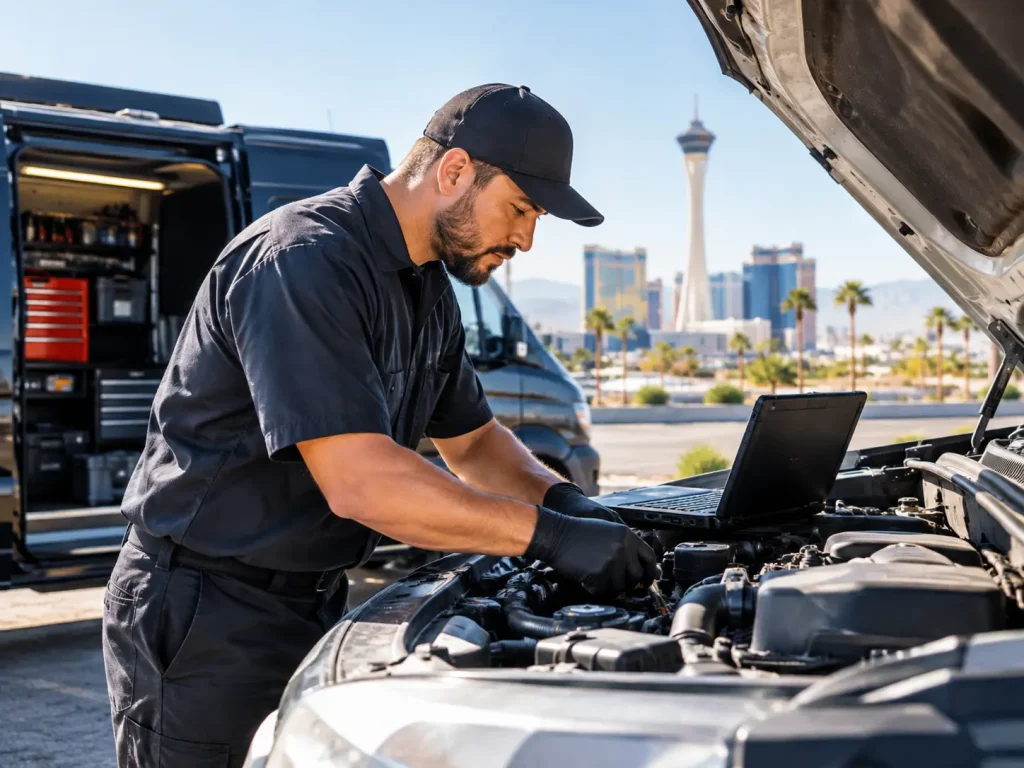
A mobile mechanic is an automotive technician who travels to your location instead of asking you to bring your car to a garage. The technician arrives with tools, equipment and, in many cases, common parts, and works on your vehicle where it is parked, whether that is your driveway, your workplace or a parking lot. The goal is the same as any good repair service: find the problem, explain it clearly and fix it properly. The difference is that you do not have to arrange a drop off, wait in a lobby or find a ride.
How Does Mobile Car Repair Work?
The process is usually simple:
- You contact the service and describe your car and the problem, or what maintenance you need.
- You schedule a time and place that works for you.
- The technician arrives, inspects the vehicle and explains what is needed.
- The work is done on site when possible, and you approve the work before it begins.
- You review what was done and ask any questions you have.
If the problem is not clear from your description, the technician can start with a diagnosis. That way you know what is wrong before deciding what to do next.
What Kinds of Repairs Can a Mobile Mechanic Do?
Many everyday repairs and maintenance jobs can be handled on site. Common examples include:
- Battery testing and replacement.
- Starter and alternator work, depending on the vehicle.
- Brake inspections and many brake repairs.
- Oil and filter changes and other routine maintenance.
- Belts, hoses and other wear items.
- Spark plugs and ignition parts.
- Check engine light diagnostics.
- Pre purchase inspections.
- Fluid checks and top offs.
What is available can vary by technician, so it is always worth asking about the specific service you need. A good rule of thumb is that jobs that do not require lifting the whole vehicle high into the air or using large fixed equipment are the easiest to do at your location.
What Repairs Might Need a Shop?
Some jobs are better suited to a shop. Large repairs that need a vehicle lift, specialized machines or a controlled work area, such as certain transmission or major engine work, alignments or some body and frame repairs, may need to be done at a shop. A mobile technician can still be useful in these cases. They can diagnose the problem, explain what is needed and help you decide what to do next. If a job cannot be done properly on site, a good technician will say so rather than cut corners.
Is a Mobile Mechanic as Reliable as a Traditional Shop?
Reliability comes down to the technician, not the location. Many mobile mechanics have the same training and experience as shop technicians, and use professional tools and quality parts. What matters is that the technician is qualified, communicates clearly and stands behind the work. It is reasonable to ask about experience, certifications, the types of parts used and what happens if something is not right after a repair. Asking these questions is a good habit with any service provider.
How Do I Know What Is Wrong With My Car?
If you are not sure what is going on, start by noting the symptoms. When does the problem happen? Is there a noise, a smell or a warning light? Does it happen when the engine is cold or warm, at low speeds or high speeds, or only when turning or braking? The more details you can share, the easier it is for the technician to narrow things down. Some problems have several possible causes, so a proper diagnosis is better than guessing. For example, if your car shakes while driving, our post on what causes a car to shake while driving explains the common possibilities.
What If My Car Will Not Start?
A car that will not start is one of the most common reasons people call a mobile mechanic, and it is also one of the best fits for on site service. Causes range from a weak battery to a starter issue, a fuel problem or a loose connection. Our guide on the top 10 reasons your car won’t start walks through the most likely causes. A technician can test the battery and charging system, check connections and find out what is really happening, often without towing the car anywhere.
Do I Need to Be There?
It depends on the service and the technician’s policies. Many people like to be present at least at the start so they can describe the problem, hear the diagnosis and approve the work. Others arrange access if they are at work or away. Ask when you schedule. If you will not be there, make sure you are comfortable with the arrangements and that you have a clear way to communicate with the technician.
Where Can a Mobile Mechanic Work?
Most mobile mechanics can work wherever there is a reasonably safe, level spot with enough room to work around the vehicle. That usually includes driveways, parking lots at work and sometimes apartment parking areas. Some locations have rules about repairs, such as certain apartment communities, office parking garages or properties with restrictions, so it is wise to check before booking. Working in a dangerous location, on a steep slope or in heavy traffic is not safe, and a technician may need to reschedule or suggest a different spot.
What About Weather?
Weather can affect outdoor work. Heavy rain, lightning, extreme heat or cold and strong winds can make some jobs unsafe or impractical. If conditions are bad, a technician may suggest rescheduling or moving the vehicle to a covered spot. Planning ahead and being flexible helps make sure the work is done safely and correctly.
Is It Safe to Have Someone Work on My Car at Home?
When done properly, yes. Technicians who work at customer locations are trained to do so safely, including using proper jacks and stands when lifting is needed, protecting your driveway and handling fluids responsibly. If you have questions about how a job will be done at your location, just ask. A professional will be happy to explain.
What Should I Do to Prepare for an Appointment?
- Make sure the car is accessible and there is room to work around it.
- Gather your owner’s manual and any records of past service.
- Write down the symptoms you have noticed and when they happen.
- Remove valuables and clear out the area around the vehicle.
- Keep your phone handy for questions or updates.
- Think about any questions you want to ask before the work begins.
How Do I Know Whether the Repair Is Needed?
A trustworthy technician explains what is wrong, what needs attention now and what can wait, and answers your questions without pressure. It is fine to ask to see the worn part, ask why a repair is recommended or ask what could happen if you wait. Keep your owner’s manual in mind too, since it lists the maintenance schedule for your vehicle. If something does not feel right, you are free to ask for more explanation before agreeing to any work.
Can a Mobile Mechanic Help With Maintenance, Not Just Repairs?
Yes. Regular maintenance is one of the best uses of a mobile mechanic, because it fits easily into a busy schedule. Oil changes, brake checks, battery tests, fluid checks and general inspections can often be done while you are at home or at work. Staying on top of maintenance is one of the best ways to avoid bigger problems later, and your owner’s manual lists the service your vehicle needs.
What Questions Should I Ask Before Booking?
- Do you offer the specific service I need at my location?
- How does scheduling work, and what is the typical response time?
- Will you diagnose the problem before starting the repair?
- How will I be informed of the work to be done before it begins?
- What type of parts do you use?
- What happens if the repair needs to be finished at a shop?
- What is your policy if something is not right after the repair?
Clear answers to these questions help you feel comfortable and avoid surprises.
Still Have Questions?
Every car and every situation is a little different, and the best way to get an accurate answer is to talk to a technician about your specific vehicle. If you are curious about on site service, have a problem you need diagnosed or just want to know whether a job can be done where your car is parked, visit our homepage to learn more, or contact us and we will be glad to help.